The Valorant skin catalog
Valorant skins are cosmetic weapon finishes bought with Valorant Points. Here is every weapon and every edition, with dated VP prices, the refund window, and the honest facts on gifting, trading and free skins.
- VP rate
- ~100 VP / $1checked Sep 2026
- Editions
- 5 · SE→UE875–2,475 VP / gun
- Refund window
- 14 daysunused, base only
- Tradeable?
- Nogift only, no resale
On this page
Valorant skins are cosmetic weapon finishes you buy with Valorant Points (VP), Riot's premium currency. They change how a gun looks, sounds and animates, and nothing else. This catalog lays out the whole system the way it actually works in September 2026: what each edition costs in VP, which weapons get the good lines, and the rules that trip people up around refunds, gifting and “free” skins. Every price here is a dated band, not a live number, because prices and featured stock rotate constantly.
What a Valorant skin actually is
A Valorant skin is a purely cosmetic reskin of a weapon. It never changes damage, recoil, rate of fire or hitboxes, so it gives no competitive edge whatsoever. What higher-tier skins do add is presentation: custom equip, reload and inspect animations, muzzle and impact VFX, unique audio, and on the top lines a finisher that plays when you kill the last enemy of a round.
There is one more thing worth stating plainly, because so many pages blur it: Valorant skins are account-bound and not tradeable or sellable. There is no in-game marketplace, no player-to-player trading of items you own, no float or wear system like CS2, and no way to cash a skin back out for money. The only transfer that exists is gifting a freshly bought store item to a friend, which is covered further down.
Everything is priced in Valorant Points, the premium currency you buy with real money at roughly 100 VP per dollar. You never buy a skin with cash directly; you buy VP, then spend VP in the store. That extra step is worth remembering, because the smallest VP pack rarely lines up neatly with a skin's price, so most purchases leave a little VP stranded in your wallet — which is exactly how the pricing is designed to work.
The five editions, priced
Riot grades gun skins into five editions, and the edition sets both the price and how much presentation you get. As of September 2026 the single-gun prices are 875 VP for Select, 1,275 for Deluxe, 1,775 for Premium, roughly 2,175 for Exclusive lines and 2,475 for Ultra. The table below is the fast version.
| # | Edition | Code | VP / gun | ≈ USD | What the tier adds |
|---|---|---|---|---|---|
| #1 | Select | SE | 875 | ~$9 | Base finish and custom audio; no variants or VFX |
| #2 | Deluxe | DE | 1,275 | ~$13 | Themed finish, audio and one signature effect |
| #3 | Premium | PE | 1,775 | ~$18 | Full VFX, animations, 3–4 variants, upgrade levels |
| #4 | Exclusive | XE | ~2,175 | ~$22 | One-off, collab or event lines; features vary |
| #5 | Ultra | UE | 2,475 | ~$25 | Everything Premium has, plus a finisher and bespoke audio |
Two caveats keep this honest. First, Riot's own word for the top two tiers is effectively “varies,” so treat the Ultra and Exclusive numbers as typical rather than fixed. Second, melee (knife) skins are priced separately, commonly around 3,550 VP standalone, and bundles cost more because they package several guns plus a knife and accessories. The full breakdown of VP packs and bundle bands lives in our guide to VP and bundle prices.
Premium and higher skins also carry upgrade levels and colour variants. A line often ships with a base finish plus three or four alternate colours, and each level and variant is unlocked with Radianite Points, a separate currency earned from the Battle Pass or bought in small packs. So a Premium skin's 1,775 VP sticker is really the entry price; fully unlocking every level and swatch costs additional Radianite on top. None of that changes the gun's performance — it is all look, sound and animation.
Collections and how the store rotates
Skins are grouped into named collections — Prime, Reaver, Ion, Glitchpop, Champions and dozens more — and a collection usually covers several weapons plus a matching melee, card, spray and gun buddy. Riot sells them two ways: as a full bundle when the collection first launches, and afterwards as individual pieces through the rotating store.
Your Featured store refreshes on a set cadence with whatever bundle is currently headlining, while a separate daily store shows four single items picked for your account. This is why you cannot simply buy any skin you want at any time: if a line is not currently featured and does not roll into your daily store or Night Market, you wait. Older bundles cycle back periodically, but a handful — most notably the annual Champions Vandals — are vaulted after their window and do not return.
Rifle skins: Vandal and Phantom
The Vandal and Phantom get more skins than any other weapons, because they are the two rifles most players buy every full-buy round. That is where Riot puts its flagship lines — Prime, Reaver, Ion, Oni, Gaia's Vengeance and the annual Champions Vandals — so if you only ever skin one gun, make it your main rifle.
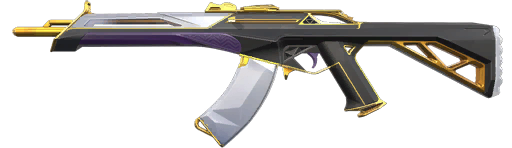
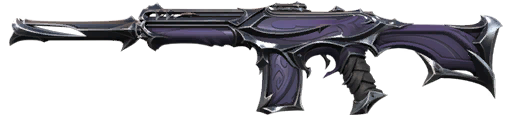
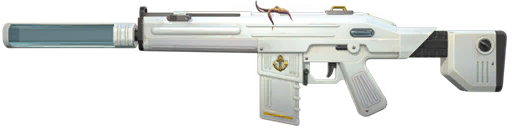
A skin never changes how these guns shoot — the Vandal's flat one-tap damage and the Phantom's faster, quieter fire are the same on a default finish as on a 2,475 VP one. If you are deciding which rifle to dress up, our Phantom vs Vandal skins comparison ranks the best of each and helps you pick.
Sidearm skins: Sheriff, Ghost, Classic and the rest
Pistols are the most-seen weapons in the game, so a good sidearm skin is quietly the best value screen-time you can buy. Every round starts on a pistol, every eco round is a pistol round, and the Sheriff, Ghost and Classic are the three you will hold most. Premium lines like Reaver, Sovereign and Ion cover all of them at 1,775 VP, and Exclusive lines like Prelude to Chaos and Glitchpop push the theatrics further.
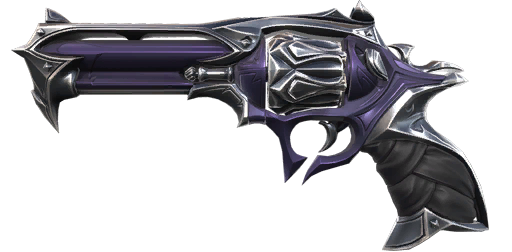
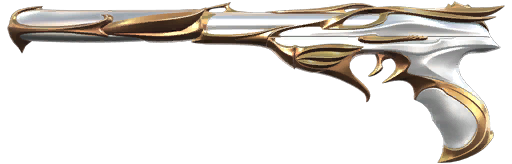
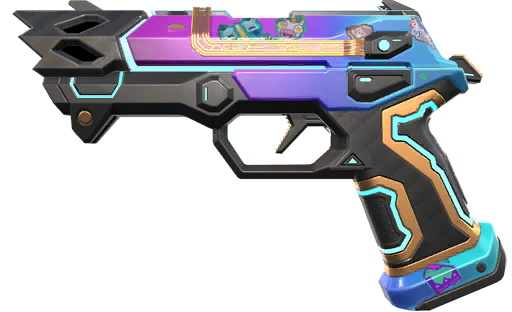
We rank the standouts in the best Sheriff and Ghost skins guide, including which cheaper Select and Deluxe pistols punch above their VP.
Snipers, SMGs and everything else
Beyond rifles and pistols, the Operator draws the most attention — it is the only weapon with a released Ultra line, the animated dragon Elderflame. The Marshal and Outlaw snipers, the Spectre and Stinger SMGs, the Judge and Bucky shotguns, and the Ares and Odin machine guns all get their own finishes, usually reusing the same collection names you see on rifles. If you main a sniper or an SMG, you are not short of options.

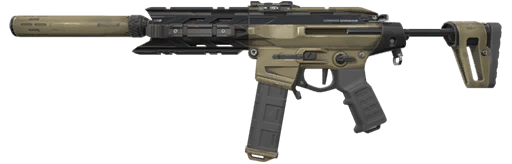

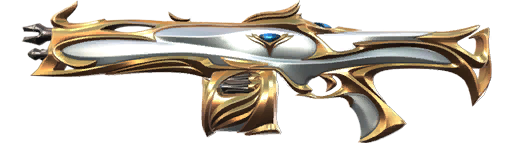
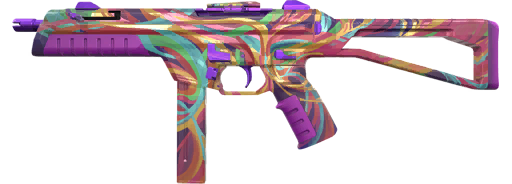

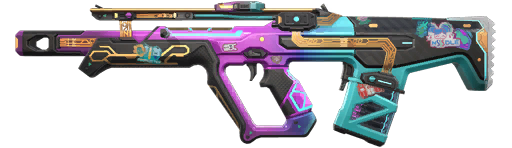
The practical takeaway for off-meta weapons is budget. Because you hold a shotgun or a machine gun far less often than a rifle, a cheaper Select or Deluxe finish usually makes more sense there than a 1,775 VP Premium line — spend the effects budget on the guns you actually use. The one exception is the Spectre, which sees real play on save and half-buy rounds, so an SMG main can justify a nicer finish on it.
Melee (knife) skins
Knife skins are the trophy tier and priced accordingly — a melee finisher usually runs around 3,550 VP standalone, more than any single gun, and many only ever appear inside a bundle. They replace the default knife with a themed melee that has its own equip, inspect and swing animations, and they are the most visible flex in the game because you sprint with the knife out.
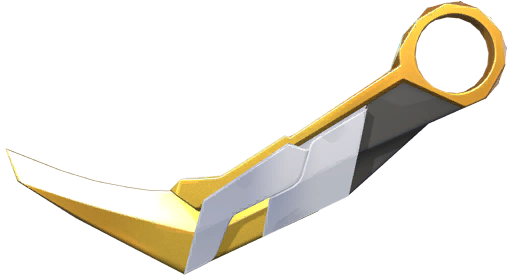
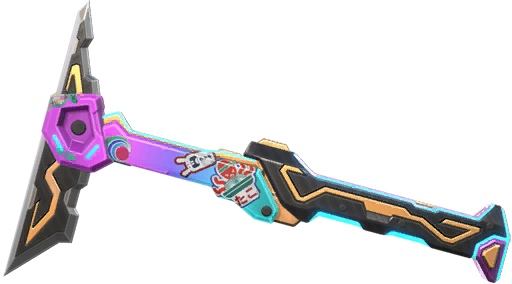
Because you cannot resell a knife and cannot refund it once it has been used, a melee is the purchase to be most sure about. Our best Valorant knife skins ranking goes through the finishers worth the VP.
How to get skins: store, VP, passes and gifting
You buy skins with VP from the rotating Featured and daily stores, at a discount during the Night Market each Act, or earn a smaller number through the free Battle Pass, event passes, agent contracts and Twitch or Prime drops. If you are chasing cosmetics without spending, start with our honest guide to free Valorant skins — and steer clear of any site promising a “free VP generator,” which is a scam that can get your account banned.
To top up VP itself you can buy directly in the client or use a game-currency card from a reseller. Reseller prices float around the official band — sometimes a little under, sometimes over — so check the live listing before you buy. The links below are affiliate links for VP cards; they never change what we recommend, and we never link account sellers or generators.
Eneba
Eneba lists regional VP top-up cards and game keys, often near the low end of the band. Confirm the card matches your account's region before checkout. Check VP cards on Eneba.
Affiliate link for Valorant Points top-up cards. We may earn a small commission — it never changes what we recommend, and we never link account sellers or VP “generators”.
CDKeys
CDKeys is a long-running digital-code store that also carries VP and gift-card denominations. Same rule applies on region. See VP options on CDKeys.
Affiliate link for Valorant Points top-up cards. We may earn a small commission — it never changes what we recommend, and we never link account sellers or VP “generators”.
Kinguin
Kinguin is a marketplace of third-party sellers for keys and currency cards, so read the seller rating and region note before buying. Browse VP cards on Kinguin.
Affiliate link for Valorant Points top-up cards. We may earn a small commission — it never changes what we recommend, and we never link account sellers or VP “generators”.
Refunds, gifting and what people get wrong
You can refund a skin only if it is a base, unused weapon skin bought within the last 14 days, and “unused” is strict — taking it into any match, or even the practice range, counts as used. Radianite-upgraded skins and whole bundles cannot be refunded at all. That last point catches a lot of buyers, so we spell it out in the Valorant refund policy guide (dated September 2026; re-check Riot support before relying on it).
Since April 2025 you can gift a friend a skin, but only a freshly bought featured-store item, and only if you have been friends for at least seven days, are on the same region, are level 15 or higher and in good standing. That is not trading — you still cannot swap items you own, and buying or selling whole accounts to get their skins violates Riot's Terms of Service and risks a permanent ban. The full rules are in our trading and gifting explainer.
Frequently asked questions
How much do Valorant skins cost?
A single gun skin is 875 VP for Select, 1,275 for Deluxe, 1,775 for Premium, roughly 2,175 for Exclusive and 2,475 for Ultra, which is about $9 to $25 (checked September 2026). Melee skins are separate at around 3,550 VP, and bundles cost more because they include several items.
Can you refund a Valorant skin?
Only if it is a base, unused weapon skin bought in the last 14 days, refunded for VP through Riot's support tool. Taking it into any match, or even the practice range, makes it 'used' and non-refundable, and bundles cannot be refunded at all.
Are Valorant skins tradeable or sellable?
No. Skins are account-bound with no marketplace, no trading of owned items and no cash-out. Since April 2025 you can gift a friend a freshly bought store skin, but that is a new purchase, not a trade.
Do skins give any gameplay advantage?
No. Skins are purely cosmetic and never change damage, recoil or hitboxes. Higher tiers add animations, VFX and audio, but that is all presentation.
What is the best value edition to buy?
Premium at 1,775 VP is the sweet spot for most players, because it includes full VFX, animations, colour variants and upgrade levels. Select and Deluxe are cheaper if you just want a clean look without effects.
How do you get free Valorant skins?
Through the free Battle Pass and event pass tracks, agent contracts, and Twitch or Prime Gaming drops tied to esports. 'Free VP generator' sites are scams and can get your account banned; there is no legitimate generator.